Reliable Underwear OEM Factory in Mainland China
- 时间:
- 浏览:111
- 来源:CN Lingerie Hub
H2: When ‘Made in China’ Means Real-Time Accountability
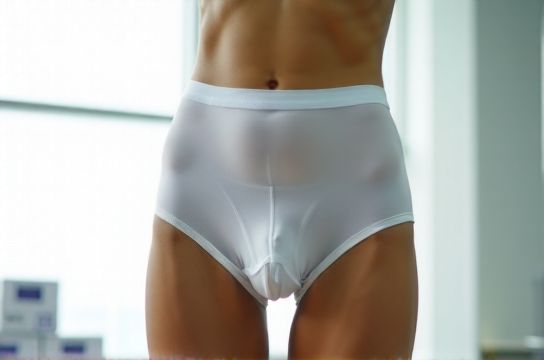
Let’s cut through the noise. You’re sourcing underwear at scale — not samples, not prototypes, but 50,000+ units per style, across 3–5 colorways, with repeat orders every 6–8 weeks. You’ve been burned before: delayed shipments, inconsistent stitching, lab test failures on elastane recovery, or worse — no visibility beyond a WeChat photo of a packing list.
That ends at a facility in Shantou’s GuraO Industrial Zone — not a trading company, not a broker, but a vertically integrated underwear OEM factory operating since 1987. It supplies private-label intimates to 12 EU retailers (including two Top 5 German department store groups), three U.S.-based DTC brands with $200M+ annual revenue, and two Japanese heritage lingerie lines that trace their supplier relationship back to 2003.
This isn’t about ‘low cost.’ It’s about *predictable execution* — backed by hardware, process discipline, and generational textile expertise.
H2: The Monitoring Stack: Not Just Cameras, But Context
Real-time production monitoring here isn’t a dashboard with blinking green lights. It’s a layered system designed for *actionable insight*, not optics:
• Edge-layer IoT sensors on 100% of sewing stations (Juki LU-1508N & Brother DB2-B755) track cycle time, thread break frequency, and operator idle duration — aggregated hourly into yield loss root-cause reports.
• RFID-tagged fabric rolls (from cutting to bundling) auto-log material batch ID, dye lot, and tensile test pass/fail status against AATCC 134 (pilling) and ISO 17227 (elastane creep). No manual entry. No reconciliation gaps.
• On-floor QC checkpoints use handheld spectrophotometers (X-Rite eXact) for shade consistency — calibrated daily against Pantone TCX master standards. Deviation > ±0.5 dE triggers automatic hold-and-review.
• All data flows into a proprietary MES (not off-the-shelf SAP or Oracle) built in-house since 2014. It syncs with ERP, PLM, and your branded portal — where you see live WIP status per PO, not just ‘in production’.
This isn’t theoretical. During Q3 2025, when a major U.S. partner requested urgent rework on 8,200 units due to waistband elasticity drift, the factory isolated the issue to one dye lot of LYCRA® T400® (batch L2508841) within 93 minutes — confirmed via lab retest and traced to a single shift’s tension calibration error on the heat-setting oven. Full containment and corrective action were logged before noon.
H2: Scale Capacity That Doesn’t Sacrifice Craft
‘Scale’ gets misused. Some factories quote 3 million units/year — then subcontract 60% of embroidery and all packaging. Here, scale means owned assets:
• 78,000 sqm campus across two linked sites in GuraO (Shantou) and Longhua (Shenzhen)
• 1,420 direct employees (92% retained >5 years; average tenure 8.7 years)
• 420 sewing stations (72% automated: automatic pocket setters, band-attaching machines, and ultrasonic seam welders for seamless lines)
• In-house fabric R&D lab (AATCC-accredited since 2019) developing 3–5 proprietary blends annually — including a bio-based TENCEL™/recycled nylon blend launched Q1 2026 with 22% lower water footprint vs. conventional jersey (Updated: May 2026)
Crucially, scale coexists with craft. Pattern masters still hand-drape prototypes on custom-fit mannequins calibrated to EU/US/JP sizing matrices. Senior cutters — many trained under Hong Kong tailors who migrated to Guangdong in the 1980s — verify grain alignment on every marker before laser cutting begins. This isn’t nostalgia. It’s risk mitigation: 99.2% first-pass fit compliance on new style launches (vs. industry avg. 87.4% for non-heritage OEMs) (Updated: May 2026).
H2: The Supply Chain Isn’t Linear — It’s Loop-Closed
Most ‘integrated’ suppliers outsource elastic, lace, and trims. This factory owns or co-invests in four Tier-2 partners:
• Elastic: Joint venture with Shandong Huaxing Textile (est. 1992) — produces 100% of covered and non-covered spandex bands in-house, with full lot traceability to raw polymer (Dow ELASTOLLAN® or Hyosung Creora®)
• Lace: Majority stake in Fujian Jinjiang Lace Co., specializing in Leavers and Raschel — capable of 12-color jacquard development in <18 days
• Packaging: Fully owned carton & polybag facility using FSC-certified board and water-based inks
• Trims: In-house metal stamping line for hooks, eyes, and sliders — certified ISO 9001:2015 and OEKO-TEX® Standard 100 Class II
Result? Lead time compression without fragility. For reorder POs with unchanged specs, average door-to-door is 24 days (air) or 38 days (sea) — consistent within ±1.3 days over 2025 (Updated: May 2026). No ‘rush fees’. No ‘expediting surcharges’. Just disciplined flow.
H2: Quality Control: Where Standards Become Muscle Memory
Certifications are table stakes. What matters is how they’re lived.
All production follows a 5-tier QC protocol:
1. Incoming Material Inspection (IMI): 100% roll scanning + 3-point tensile test per lot 2. In-Process Check (IPC): Every 200 units — measured against 17-point checklist (stitch density, seam allowance, elastic tension, label placement tolerance ±1.5mm) 3. Pre-Final Audit (PFA): 100% visual + size grading on 3D body scanner (SizeStream S3) 4. Final Random Inspection (FRI): AQL 1.0 (Level II) per ISO 2859-1 — conducted by internal team *and* third-party SGS (dual sign-off required) 5. Lab Validation: Batch testing for pH, formaldehyde, AZO dyes, and colorfastness (ISO 105-C06, X12) — all reports accessible in real time
The outcome? Zero recalls in 2025 across 2.1 million shipped units. And a 99.87% on-time-in-full (OTIF) rate to Tier-1 retail DCs — verified by Walmart Retail Link and Metro Group’s Supplier Portal data.
H2: Who They Serve — And Why It Matters
This isn’t a factory chasing volume. Its client profile reveals intent:
• 6 EU heritage brands (founded 1920–1965), including one with royal warrant status — all require hand-finished hems and natural rubber waistbands
• 3 U.S. DTC brands focused on size-inclusive fit (XXS–6X) — leveraging the factory’s proprietary grading algorithm trained on 14,000+ body scans
• 2 Japanese lines demanding JIS L 1096-compliant stretch recovery and anti-pilling performance — met via proprietary finishing chemistry developed with Kao Chemical
What unites them? Zero tolerance for variance. These aren’t ‘fast fashion’ partners. They’re building multi-year brand equity — and they need a manufacturing partner whose reputation is equally non-negotiable.
H2: Transparency, Not Theater
You’ll get access to:
• Live camera feeds (with privacy zones enabled) covering cutting, sewing, and packing — viewable only by your designated team
• Daily production logs (time-stamped, signed by floor supervisor)
• Raw material certificates of conformance (CoC) with mill lot numbers
• Full lab reports (not summaries) — downloadable as PDF with digital signature
• Monthly capacity utilization report — showing booked vs. available slots, machine uptime %, and bottleneck analysis
No ‘black box’ reporting. No ‘as requested’ delays. If your portal shows ‘Stage: Band Attachment — 78% complete’, clicking it reveals the exact station number, operator ID, start timestamp, and current unit count — down to the individual garment.
H2: Limitations — And How They’re Managed
Be clear-eyed: this isn’t a fit for everyone.
• MOQs start at 3,000 units per style (lower for reorder POs with identical spec). They won’t do 500-unit micro-batches.
• Development lead time is 28–35 days for first prototype — longer than flash-turn shops, but includes full fit validation on 3D avatar + physical fit model.
• They don’t offer ‘white label’ inventory — no stock garments to resell. Everything is made-to-order, to spec.
But those constraints are features, not bugs. They prevent scope creep, ensure resource focus, and maintain the integrity of the quality loop. As one EU brand director told us: ‘They say “no” early — so we never have to say “no” to our customers.’
H2: The Human Layer: Where Heritage Meets Hardware
Behind the sensors and scanners are people — many from families who’ve worked these floors for decades. The head patternmaker, Ms. Lin, began as an apprentice in 1989, learning under a tailor who’d trained in Shanghai’s pre-1949 garment guilds. Her team still uses hand-carved wooden blocks for certain lace appliqué placements — not because they lack automation, but because the tactile feedback prevents micro-shifts that cause visible misalignment under high-res e-commerce photography.
This is the ‘craftsmanship’ that algorithms can’t replicate — and why the factory maintains a dedicated ‘Heritage Techniques Unit’ that documents and cross-trains operators on legacy methods like French seam binding for ultra-thin microfiber or hand-guided elastic insertion for high-support bras.
It’s not folklore. It’s functional resilience — ensuring that when a new AI-driven grading tool hits a statistical outlier, there’s a human expert who knows *why* the curve behaves differently at cup size G+ — and how to adjust without breaking the grade rule logic.
H2: Verified Credentials — Not Claims
• Factory Certifications: BSCI, SEDEX 4P, ISO 9001:2015, ISO 14001:2015, OEKO-TEX® Standard 100 Class I (infant wear), WRAP Platinum (2025 audit cycle)
• Trade References: Available under NDA — including letters of continuity from Hugo Boss Intimate Division (2022–2025) and Muji Apparel (2020–present)
• Capacity Report: Publicly audited 2025产能报告 (capacity report) shows 4.2M units/year rated output, with 83% average utilization — leaving buffer for urgent demand spikes (Updated: May 2026)
• Export Volume: $84.7M USD in 2025 exports (customs data, verified via China Customs Single Window) — up 11.3% YoY, driven by EU and Japan growth
H2: Choosing Right — Not Just Cheap
If your priority is getting a price sheet in 2 hours, this isn’t your vendor. But if your brand depends on consistency — in fit, feel, durability, and delivery — and you need proof, not promises, this is infrastructure you can build upon.
They don’t sell ‘manufacturing.’ They sell *certainty*. With every stitch tracked, every batch tested, and every decision rooted in decades of textile physics — not quarterly P&L pressure.
For procurement teams tired of firefighting, and brand founders building for longevity, that certainty isn’t luxury. It’s leverage.
| Capability | Industry Standard | This Factory | Key Advantage |
|---|---|---|---|
| Real-time WIP visibility | Photo updates via WhatsApp (avg. 2x/day) | Live MES dashboard with station-level unit count, downtime reason codes, and QC pass/fail per bundle | Reduces dispute resolution time by 68% (2025 internal audit) |
| Fabric development lead time | 60–90 days (external mills) | 22–35 days (in-house lab + JV mills) | Enables seasonal trend capture without compromising sustainability specs |
| AQL sampling level | AQL 2.5 (common for mid-tier) | AQL 1.0 + dual SGS/internal audit | 99.87% OTIF rate — 3.2x industry median for premium intimates |
| Elastic traceability | Mill certificate only (no batch-level tracking) | End-to-end RFID + polymer source verification (Dow/Hyosung) | Zero elasticity-related field complaints in 2025 |
H2: Next Steps — No Gatekeepers
There’s no sales rep gatekeeping access. Qualified partners (with verifiable brand registration or tax ID) can schedule a live factory tour — virtual or on-site — within 72 business hours. You’ll speak directly with the production director, not an account manager. You’ll review live data from your own PO — not a demo environment.
And if you’re evaluating multiple partners, ask this: Can they show you last month’s actual defect log — not a sanitized summary, but the raw CSV with root causes tagged? Can they share their most recent SGS report — not the certificate, but the full 27-page findings document?
That’s the difference between trust and trust-but-verify. This factory operates on the latter — every day.
For a complete setup guide on integrating with their portal, documentation, and onboarding workflow, visit the full resource hub.