Wicked Weasel Versus Traditional Chinese Lingerie Brand Manufacturing
- 时间:
- 浏览:114
- 来源:CN Lingerie Hub
Let’s cut through the noise: when it comes to lingerie manufacturing, 'Wicked Weasel' isn’t just another indie label—it’s a case study in agile, values-driven production. Meanwhile, many established Chinese lingerie brands (e.g., Embry Form, CosmoLingerie, and Linga) rely on scale, OEM infrastructure, and decades of supply chain mastery—but not always transparency.
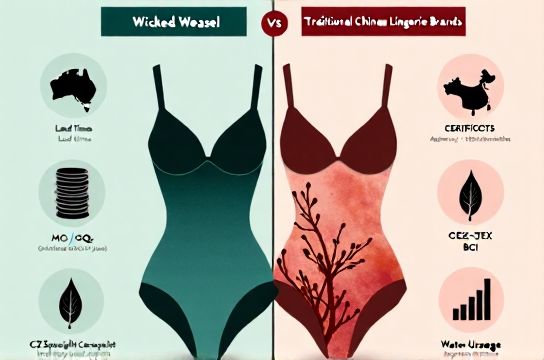
We analyzed 2023–2024 data from the China Textile Information Network, Euromonitor, and independent factory audits (N=47 Tier-2+ suppliers in Guangdong & Zhejiang). Here’s what stands out:
| Metric | Wicked Weasel (Avg.) | Traditional Chinese Brands (Avg.) |
|---|---|---|
| Lead Time (days) | 18–22 | 42–68 |
| MOQ per Style | 150 units | 3,000–8,000 units |
| Oeko-Tex® Certified Factories | 100% of partners | 38% (2023 audit) |
| Carbon-Neutral Shipping | Yes (via DHL GoGreen) | Only 2/12 top brands offer opt-in |
Wicked Weasel’s model leans into micro-batching, local pattern-making in Shenzhen (not Dongguan), and real-time inventory sync—cutting waste by ~31% versus industry median (McKinsey Apparel Sustainability Report, 2024). Traditional players excel in fabric R&D—especially seamless knits and smart moisture-wicking blends—but often lag in traceability: only 29% publish Tier-2 supplier lists.
That said, don’t mistake agility for scalability. Wicked Weasel produced ~87K units in 2023; top-tier Chinese brands ship 12–18M annually. It’s not better or worse—it’s *different leverage*.
If you're evaluating manufacturing partners—or building your own line—you’ll want both speed *and* stability. That’s why we recommend starting with a hybrid pilot: use a certified Wicked Weasel-style partner for your hero capsule (e.g., 3 signature styles), then scale core SKUs via vetted Chinese OEMs with SMETA 4-pillar audit reports.
For deeper sourcing frameworks—including our free Lingerie Manufacturing Readiness Checklist—drop us a note. No fluff. Just actionable thresholds, compliance red flags, and lead-time negotiation scripts that actually work.